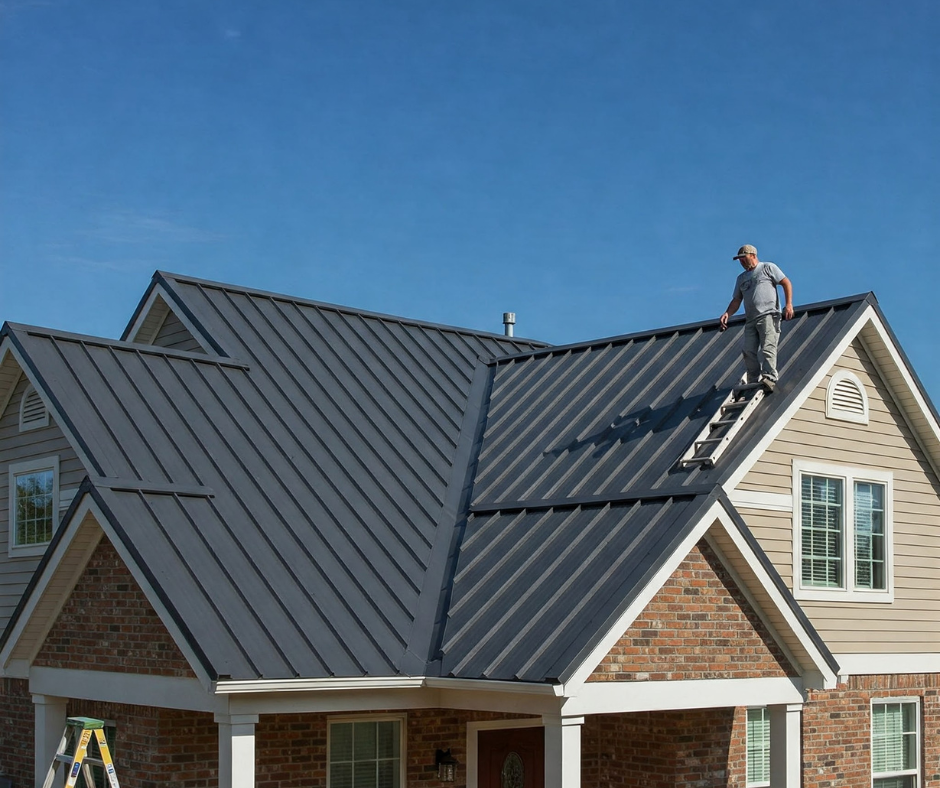
Most Auckland homeowners live with a problem roof for longer than they really want to. A small leak here, a stained ceiling there, another patch repair when the weather turns bad. At some point, the question changes from “Can we fix it again?” to “Is it time to replace the whole thing?” That’s where a metal reroof becomes a serious option.
So how do you know when you’ve reached that point, and why do so many people choose metal when they finally decide to reroof?
What Are the Signs Your Current Roof Is Near the End of Its Life?
Roofs rarely fail overnight. Instead, they slowly show more and more signs of age and stress. You might notice leaks that only appear in certain wind directions, rust patches that keep creeping wider, or tiles that crack and slip no matter how many times they’re replaced.
Stained ceilings, bubbling paint, or musty smells after rain are often the first clues inside the house. Outside, you might see sagging sections, obvious patch jobs in different colours, or gutters that overflow even after you’ve cleaned them. If you find yourself holding your breath every time a heavy rain warning comes through, that’s usually a sign the roof is on your mind more than it should be.
One or two small issues don’t always mean the roof is finished, but when problems keep returning in different places, it’s often a sign the whole system is getting tired.
Why Doesn’t Another Repair Always Solve the Problem?
Repairs are great when the roof is generally sound and you’re dealing with a one-off issue – a slipped tile, a bit of damage from a fallen branch, a single rusty sheet in an otherwise healthy roof. The trouble starts when repairs become the norm rather than the exception.
On an older roof, the material itself may have reached the end of its realistic life. You can patch the obvious weak spots, but new ones keep appearing because the underlying problem hasn’t changed. The roof covering might be too porous, too rusted, or too unstable to give you a reliable seal, no matter how many times someone goes up and works on it.
Every repair has a cost in money and in disruption. After a while, you’re not investing in a lasting solution; you’re just buying another short delay before the next issue shows up.
Why Is Metal Reroofing Often the Best Replacement Option?
When you decide it’s time to replace the roof, metal is usually near the top of the list, especially in Auckland. Long run metal roofing is designed to handle heavy rain, strong wind, and coastal air, all of which are part of everyday life here. It sheds water quickly, doesn’t absorb moisture, and can be laid in long, continuous sheets to reduce the number of joins on the roof.
For many homes, switching from old tiles or tired iron to metal means:
- A lighter roof that puts less strain on the structure
- Cleaner, simpler water paths from ridge to gutter
- Modern materials and coatings suited to New Zealand conditions
You’re not just swapping one worn-out surface for another. You’re resetting the whole roofing system to something designed to perform for decades, rather than hanging on for another few years.
When Is It Better to Reroof Instead of Just Replacing a Few Sheets or Tiles?
There is a middle ground between constant small repairs and a full reroof. Sometimes, replacing a small area or a few sections of roof is perfectly sensible. But there’s a tipping point where it no longer makes financial or practical sense to keep patching.
If your roof has multiple different repair materials already, frequent leaks from new locations, or widespread rust or cracking, replacing just “the worst bits” is unlikely to change the long-term picture. You may reduce the urgency, but you’re still living under a roof that’s showing its age in many places.
Reroofing makes more sense when:
- Problems are spread across large areas, not just one corner
- The roof covering is old enough that failure is expected, not surprising
- You’re starting to see internal damage to ceilings, walls, or framing
At that stage, the cost of a full metal reroof, spread over its likely life, often works out better than years of ongoing patch repairs and associated damage.
How Disruptive Is a Metal Reroof for Everyday Living?
A lot of homeowners put off reroofing because they imagine weeks of chaos. In reality, a well-planned metal reroof is usually far more organised than people expect.
The roofing team works in sections, removing old material and installing new metal so the house stays as weather-tight as possible throughout the process. There will be noise and activity, and access around the house may be restricted for safety while the work is underway, but you can normally stay in the home while the project is completed.
Before work begins, you should be given a clear outline of timing, stages, and any special considerations for your property. That way you know which days are likely to be busiest and can plan around them rather than feeling like the job is endless.
Can You Improve Other Parts of the Roof System During a Reroof?
One of the advantages of a metal reroof is that it gives you the chance to fix more than just the surface. When the old roofing comes off, underlying issues become visible. Damaged battens, tired underlay, and problem flashings can be replaced instead of hidden. It’s also the ideal time to make upgrades you may have been considering for years.
You can improve insulation, add or replace skylights, install whirly birds or other ventilators, and upgrade gutters and downpipes so the entire system works together. Doing this as part of the reroof is usually more efficient than trying to tackle each element separately at different times.
Instead of just getting a new skin on an old frame, you can come out of the project with a roof system that’s modern from top to bottom.
How Do You Decide When the Time Is Right to Reroof with Metal?
There’s rarely a single perfect moment when everyone agrees you must reroof now. Often, it comes down to a combination of roof condition, budget, and future plans for the property.
If you’re planning to stay in the home long term, a metal reroof can be seen as a solid investment in comfort and reliability. If you’re thinking of selling in a few years, doing the roof now can make the property easier to market and remove a major objection buyers might raise.
A practical way to decide is to get a frank assessment from a roofing specialist. Ask them to explain:
- The current condition of your roof and likely remaining life
- The sort of repairs you’re likely to face if you delay
- What a full metal reroof would involve and roughly cost
With that information, you can weigh up whether you want another round of patching or whether it makes more sense to draw a line under the old roof and start fresh with metal.
Where Can You Learn More About Getting the Whole Roof System Right?
If you’re considering a metal reroof, it’s important to remember that roofing and drainage go hand in hand. The previous article in this series, “Why Should Is Metal Roofing A Smart Choice In Auckland” (Blog 7), explains why your gutters and downpipes are just as important as the roofing material when it comes to handling Auckland’s heavy rain.
If you’re also planning changes to your home more broadly, the next article, “How Should You Plan Metal Roofing for an Auckland Renovation?” (Blog 9), looks at how metal roofing fits into renovation projects and why it pays to think about the roof early in the design process rather than leaving it until the end.