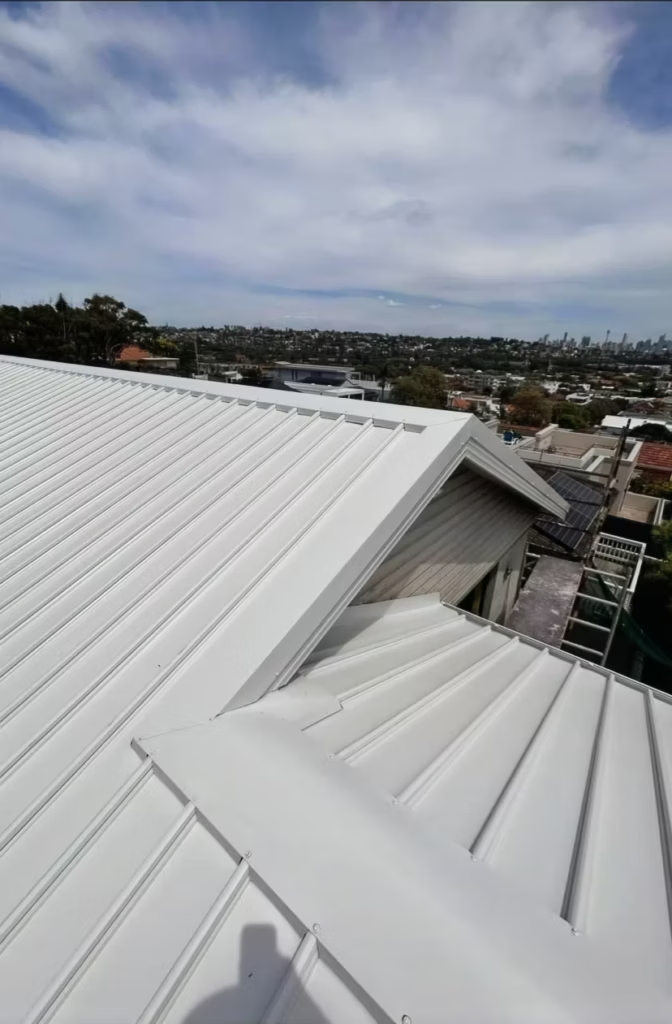
When people talk about long run roofing Auckland wide, they’re usually referring to metal roofing sheets that run in long, continuous lengths from the ridge down to the gutter. Instead of lots of short pieces with many joins, you end up with neat, straight runs of metal that give your home a clean, modern look and reliable weather protection.
Long run roofing has become one of the most common choices for Auckland homes, both on new builds and reroofs. It looks sharp, handles heavy rain well, and can be installed on a wide range of roof shapes. But what actually makes it different from other roofing options, and why has it become so popular across the city?
How Is Long Run Roofing Different from Other Roofing Types?
The main difference lies in the length and layout of the sheets. With long run roofing, the idea is to minimise the number of horizontal joins on the roof. Wherever practical, a single sheet is used from ridge to gutter, or from one change of direction to the next. Vertical laps are carefully overlapped and fixed, but you avoid having rows of small pieces stacked on top of each other.
This is quite different from tile roofs, where the roof is made up of many small units laid in repeating rows, or from older metal systems using shorter sheets with more joins. Every join on any roof is a potential weak spot. By reducing the number of joins, long run roofing reduces the number of places where water or wind can work their way in.
In practical terms, that means a smoother-looking roof, fewer complex junctions, and a simpler path for water to follow as it drains off the house.
Why Does Long Run Roofing Suit Auckland’s Rainy Climate?
Auckland’s weather is known for sudden heavy showers and periods of sustained rain. Roofs that hold on to water or allow it to pool are more likely to develop leaks over time. Long run metal roofing is designed to move water off the roof as quickly and cleanly as possible.
The smooth surface of the metal, combined with the long, uninterrupted runs of sheet, encourages water to flow directly into the gutters. There’s less opportunity for water to sit on the surface or find its way into awkward overlaps. When the right profile is chosen for the roof pitch, and gutters and downpipes are sized properly, long run roofing and drainage work together as a single, efficient system.
In a climate like Auckland’s, where one bad storm can reveal every weakness in an old roof, that ability to shed water quickly is a major advantage.
Does Long Run Roofing Work on Low-Pitch Roofs and Extensions?
Many Auckland homes have low-pitch roofs on extensions, garages, or more modern sections of the house. These lower pitches can be tricky for some roofing materials, especially those that rely on overlapping small units or tiles. Water has more time to sit, and the risk of it tracking back under the roofing increases.
Long run roofing, when installed to the correct specifications, works very well on low-pitch roofs. Different profiles are designed for different minimum pitches, and as long as the right one is used, water can still drain effectively even when the slope is gentle. That makes long run roofing a good option for connecting old and new parts of a house, or for covering long, low roofs on additions and outdoor living areas.
Instead of having different roof types meeting in awkward junctions, you can often use long run metal to create one continuous, unified surface.
How Does Long Run Roofing Affect the Look of a Home?
Beyond performance, long run metal roofing has a big impact on how a home looks. The straight lines of the sheets, combined with modern colours, can tidy up and modernise a property very quickly. It’s not unusual for a house to look completely different once the old, patchy roof is replaced with a fresh long run roof.
The style is flexible too. On a contemporary home, long run profiles complement clean lines and modern cladding. On an older villa or bungalow, a carefully chosen profile and colour can respect the original character while giving the roof a much-needed refresh. Because metal roofing comes in a wide range of colours, you can match other elements like gutters, fascia, and window frames to create a consistent, well-thought-out look.
For many people, that improvement in street appeal is one of the main reasons they choose long run roofing Auckland wide when it’s time to reroof.
Is Long Run Roofing Only for New Builds, or Is It Good for Reroofs Too?
Long run roofing is used on both new builds and existing homes. On new houses, it’s often chosen because of its clean look and strong performance in local conditions. On existing homes, it’s a practical way to breathe new life into an older property whose roof has seen better days.
When a home is reroofed with long run metal, the old roofing material is removed, underlying issues are identified and addressed, and the new roofing system is installed with modern fixings, flashings, and details. It’s also a convenient time to update gutters, downpipes, skylights, and roof ventilation if needed, so the entire setup works as one.
That ability to fix past problems, improve appearance, and upgrade performance in one project is a big part of why long run metal is such a common choice for reroofs in Auckland.
What Should You Consider When Choosing Long Run Roofing for Your Home?
If you’re thinking about long run roofing for your place, there are a few key decisions to work through. The pitch and shape of your roof will influence which profiles are suitable. Your location, particularly how close you are to the coast, will affect which products and coatings are recommended. The style of your home and surrounding properties may guide your choice of colour and finish.
It’s also worth considering how the roof connects with other parts of the house. Will you be updating gutters and downpipes at the same time? Do you want to add or replace skylights or whirly birds? Are there areas where access is tight and staging will need extra thought? A good roofing contractor will walk you through these questions and explain the options in plain language.
Thinking all of this through early means the finished roof not only performs well, but also looks like it belongs on the house rather than being an afterthought.
Does Long Run Roofing Need Much Maintenance Over Time?
Like any roof, long run metal roofing benefits from sensible, regular maintenance, but it’s generally easier to look after than many alternatives. Because the surface is smooth and non-porous, dirt, moss, and lichen have a harder time getting established. There are fewer individual pieces to shift or crack, and joints are simpler to inspect.
Most of the ongoing care revolves around keeping gutters and downpipes clear, checking for any damage after major storms, and watching for early signs of wear around flashings or fixings. When issues are caught early, they’re usually straightforward to fix. The goal is to keep the roofing system in steady, good condition so it can keep doing its job in the background for many years.
Where Can You Learn More About Metal Roofing Choices in Auckland?
If you’re interested in long run roofing, it often helps to understand metal roofing performance more broadly as well. The previous article in this series, “How Do Metal Roofs Stand Up to Auckland Weather Over Time?” (Blog 2), takes a closer look at how metal roofing copes with rain, wind, coastal air, and sun over the long term.
If you’re also thinking about the financial side, the next article, “Can Metal Roofing Improve Resale Value In Auckland?” (Blog 1), explores how choosing metal – including long run systems – can help reduce repair bills and unplanned expenses over the life of your roof.